Service 05
Cloud architecture that scales with you.
We design, migrate and run cloud infrastructure that stays fast, secure and affordable as your users, your data and your team grow.
Problems we fix
- Slow pages and timeouts whenever traffic spikes.
- Releases that are risky, manual and done late at night.
- A single server or database that everything depends on.
- Cloud bills that grow faster than the business.
- No clear picture of what is running, or of why it failed.
Each of these has an architectural cause, and most can be fixed without rewriting everything. We start with an audit of how your system is built and run today, then fix the constraints in order of the risk and cost they carry. Early wins are often simple: serving static content from a CDN, adding a missing database index, or automating the release everyone dreads.
What we design and run
- Cloud migrations to AWS, Azure or Google Cloud, planned so the business keeps running while systems move.
- Container platforms on Kubernetes, and serverless setups where they fit better.
- CI/CD pipelines that test and deploy every change automatically.
- Databases, caching and queues sized for your real load.
- Monitoring, logging and alerting across the whole system.
Automated delivery changes how a team works more than any single server does. When every change is tested and deployed by a pipeline, releases become small, routine and reversible, so fixes reach customers in hours instead of waiting for the next risky release night.
Scaling patterns that work
Scalable systems follow a few well-proven patterns: stateless services that can run as many copies as traffic needs, caching for data that is read far more often than it is written, queues that absorb bursts of work, and databases tuned with the right indexes and read replicas. We apply the patterns your workload needs, not all of them by default, because every extra moving part has a running cost.
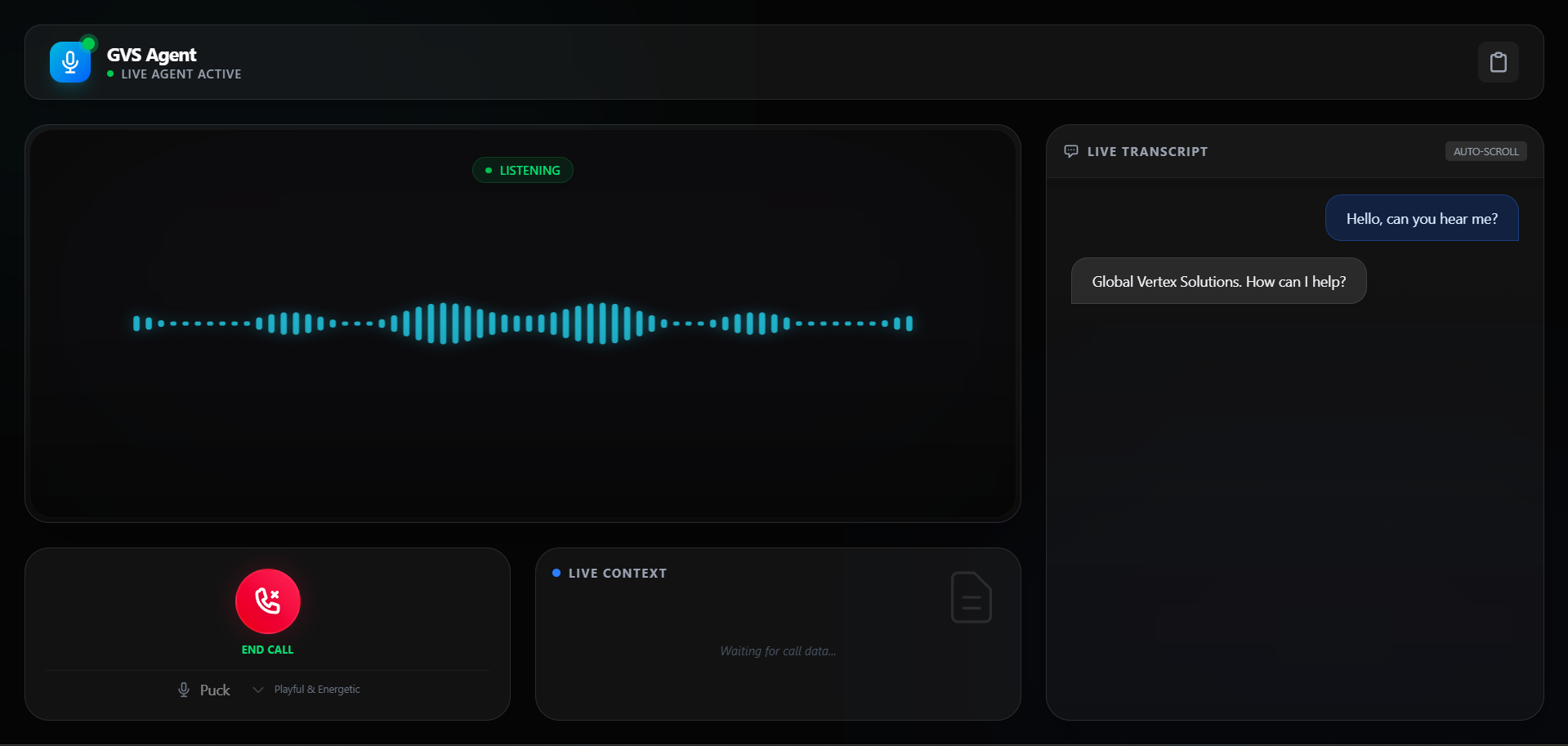
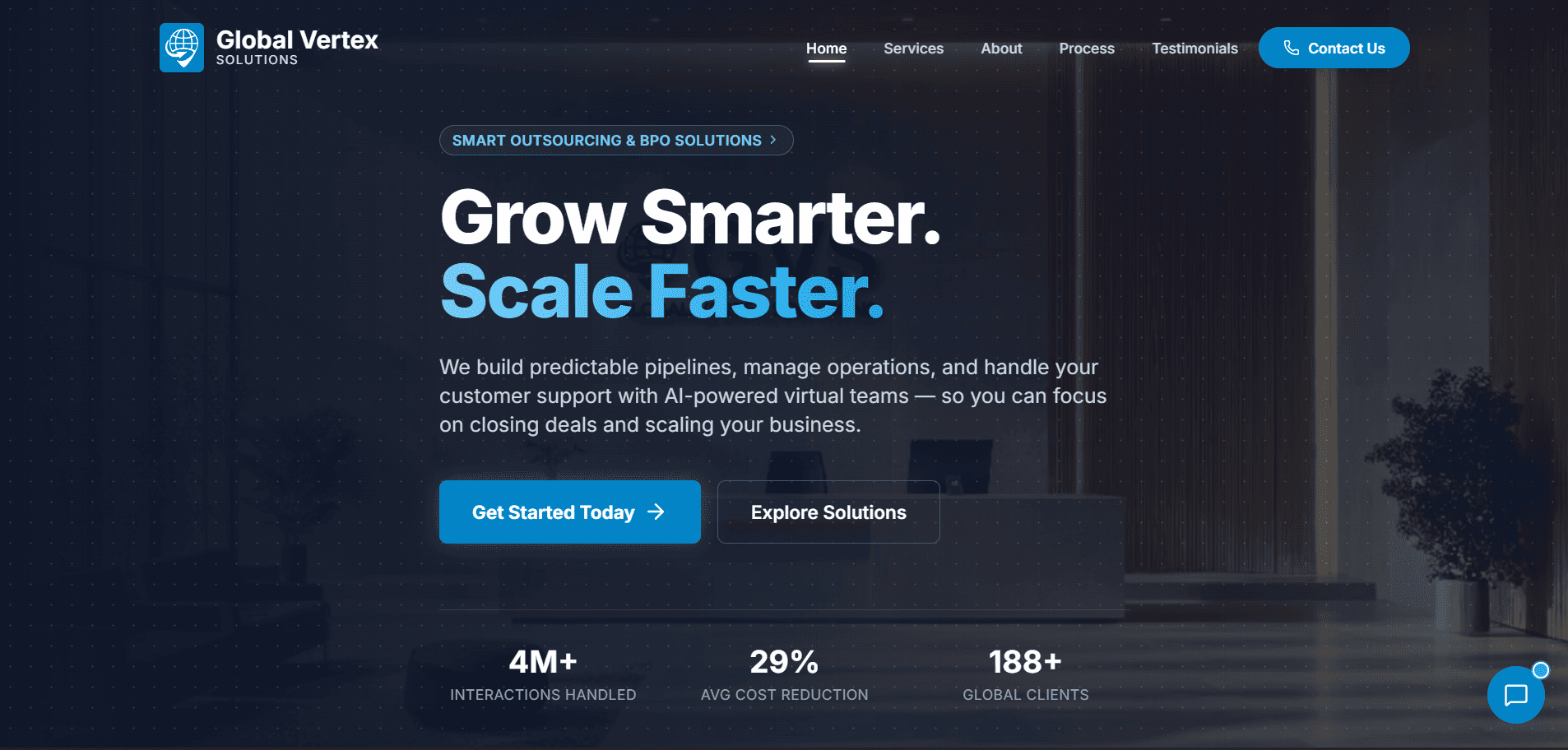
Architecture matters for speed as much as for scale. The AI voice agent we built streams audio through a pipeline designed for low latency and answers in under 800 milliseconds, and the Global Vertex Solutions website is edge-cached and scores 100 in Lighthouse for performance.
Our guide to scalable cloud architecture explains how we choose between a monolith and microservices.
Security by design
Security is part of the architecture, not a layer added at the end. We encrypt data in transit and at rest, give every service and person only the access they need, keep secrets out of code, and patch dependencies continuously. For the model we follow, read zero trust security for growing businesses.
Resilience is part of security too. Backups are automated and, just as importantly, restored in regular tests, and critical services run across more than one availability zone, so a single failure does not take the business offline.
Observability and cost control
You cannot run what you cannot see. We set up metrics, logs and traces with alerts on the signals that matter, so problems are found before customers report them. Dashboards show latency, error rates and load for every service, and alerts are tuned to wake someone only for problems customers would notice. The same visibility keeps costs in check: right-sized resources, autoscaling that scales down as well as up, and regular reviews of what you pay for.
How an engagement runs
We start with an architecture review: how the system is built, deployed and monitored today, and where it is fragile or expensive. You get a prioritized roadmap, then we implement it in stages, measuring before and after each change. When we are done, your team receives runbooks and diagrams, or we stay on to run the platform with you.
Infrastructure is what every other service stands on, from custom platforms to data analytics. Talk to us about your infrastructure.
Case studies
System Architecture, in practice.
FAQ
Frequently asked questions.
Common questions about our System Architecture service.
Often not. A well-structured monolith is simpler to build, test and run, and it scales further than most teams expect. We recommend splitting services only where there is a clear reason, such as very different scaling needs or independent teams, and we can evolve a monolith gradually when that time comes.
AWS, Microsoft Azure and Google Cloud, as well as platforms such as Vercel and Supabase for web applications. We recommend based on your needs, existing contracts and team skills rather than a fixed preference. Where portability matters to you, we avoid provider-specific services that would make a later move expensive.
In most cases, yes. We plan migrations in stages, run old and new systems side by side where needed, and switch traffic over gradually with a tested way back. Any unavoidable maintenance window is short, scheduled and agreed in advance.
By sizing resources to real usage, using autoscaling that scales down as well as up, choosing managed services where they cost less than running your own, and reviewing spend regularly with alerts on anything unexpected. We tag and report costs by service, so you can see where the money goes.
Yes. We can run and monitor your infrastructure after launch, handle security updates and incidents, and keep improving performance and cost, or hand everything over to your team with documentation and runbooks. Either way, monitoring and documentation are set up so that nothing depends on one person's memory.
Still have a question? Email us
More services
Everything else we build.
- 01 AI Integration Foundation models and ML pipelines built into the tools you already use.
- 02 Custom Platforms Web, mobile and SaaS products shaped around how your business works.
- 03 Process Automation Workflows that run themselves across your existing software.
- 04 Data Analytics Pipelines and dashboards that turn raw data into decisions.
Let’s talk
Have a project in mind?
Tell us what you’re building. The first consultation is free.
Prefer email?info@b2xgroup.com